
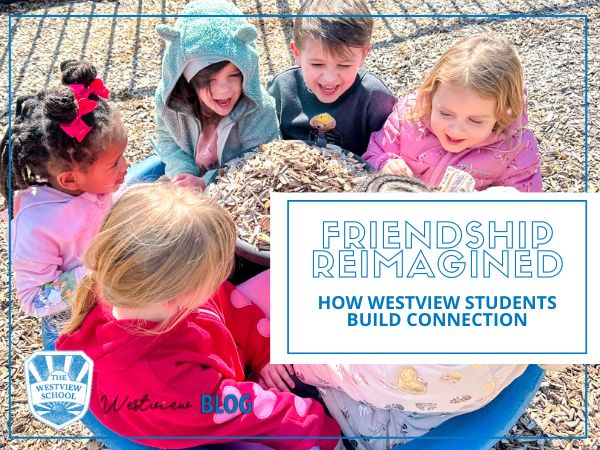
Friendship, Reimagined: How Westview Students Build Connection
February 10, 2026
If you follow Westview on social media, you may have seen a recent video where Middle School students shared what they love about Westview and how it makes them feel. Their answers were heartfelt and reminded us why the school prioritizes connection and community. As one student explained, coming to Westview made them feel comfortable: when they were younger, they didn’t always feel included, but here [at Westview], “they were really nice to me, and I made great friends. I was no longer lonely anymore.” Another student said, “Honestly, the fact that I have friends... like, I have loads of friends. Come on, like loads of them.”
Friendship, Practiced Every Day
Friendship at Westview is intentional. For students whose social skills develop differently, connecting with peers doesn’t always happen naturally. That’s why social-emotional development is an essential part of the Westview curriculum and is built into daily learning. This gives students structured opportunities to practice connecting, collaborating, and communicating.
Social-Emotional Skills in Action
Fly Five is the social-emotional curriculum used in grades K through Middle School at Westview. After careful research, the school adopted the program campus-wide in 2022 because it directly supports the development of important relationship-building skills, such as empathy, cooperation, self-control, responsibility, and assertiveness. Teachers start these lessons in the classroom and give students opportunities to practice. Over time, what we see is these skills showing up organically across campus, in group projects, interactions outside of class, and everyday moments.
Extra Support for Friendships
In addition to classroom instruction, programs offered by The Stewart Center provide students with additional opportunities to strengthen peer relationships in smaller groups and therapeutic settings. Families can enroll their students in groups such as Lunch Bunch, Understanding Social Cues, and LEGO Club. Each group is uniquely designed to engage students through interest and use shared activities with peers and gentle guidance from therapists to support conversations and build confidence.
Friendships Taking Shape in Small Groups
Theresa Bautista, Occupational Therapist at The Stewart Center, sees this growth firsthand in her Lunch Bunch, Life Skills, and Fitness groups.
“In my Lunch Bunch groups, I’ve had the privilege of watching friendships take shape in meaningful ways,” Theresa shared.
“These students may have different personalities and ways of communicating, but kids have a way of finding common ground when they are in a safe and supported environment.”
During Lunch Bunch, students share special interests, tell stories from their lives, practice turn-taking in conversation, and work through small moments of conflict together. Theresa has watched students who were once very quiet begin to speak up, make jokes, and express their ideas with confidence.
One of the most rewarding moments comes when those relationships extend beyond the group itself. Students discover shared interests, make plans to spend time together after school, and advocate for one another in the classroom, including speaking up for peers who do not always communicate using spoken language.
Practical Ways to Build Connection
Mimi Le, Clinical Director of the Stewart Center and a licensed psychotherapist, has therapy groups available for enrollment that help students build essential skills for staying safe at school, at home, and online. She offered practical tips for being intentional in encouraging social interaction and friendships.
Tip 1: Taking the pressure off by making it a group activity or shared celebration will make it easier for individuals to hangout. It builds anticipation and gives them a reason to make more conversation based on a shared outing.
Tip 2: Group chats can also encourage camaraderie. Some personalities shine brighter when conversations are not face-to-face. They can also use gifs and memes to further share laughter and interests.
Tip 3: Working together to accomplish a goal can lead to great bonding time. Such as a volunteer event, teaching others about a special interest, a team project, or a fun scavenger hunt can build confidence in themselves and each other.
Celebrating Friendship
At Westview, friendship is cultivated, practiced, and celebrated. From classroom projects to casual conversations to structured therapeutic groups, students are learning that meaningful connections can be built, moment by moment, together.
Want to Learn More?
Families can contact The Stewart Center to learn about programs that help students practice social skills, build friendships, and grow confidence in supportive, guided settings.
Email Mimi Le at mle@westviewschool.org