

Executive Functioning for Real Life: Supporting Routine, Time, and Responsibility at Home
January 12, 2026
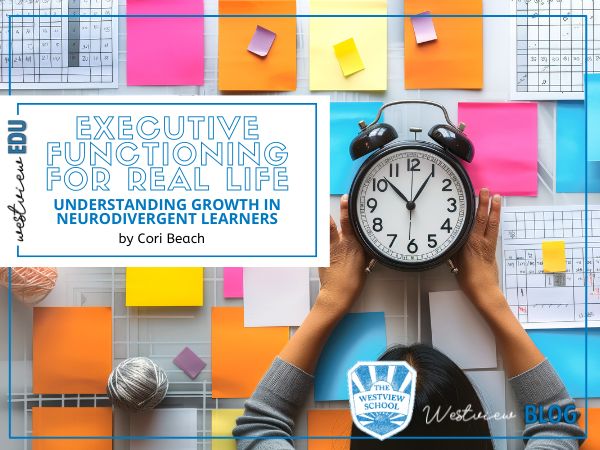
Executive functioning comes up a lot in conversations about learning and behavior, but it can feel vague or overwhelming. What does it actually mean? And more importantly, what can families do at home that truly helps?
In a recent Westview EDU session, Cori Beach, Coordinator of Student, Family, and Community Engagement at The Westview School, shared practical, realistic ways to support executive functioning through everyday routines. Her focus was simple: tools you can actually use, starting right now.
What Is Executive Functioning, Really?
Executive functioning refers to a set of skills we use every day to manage our lives. These include:
- Starting and completing tasks
- Managing time and transitions
- Regulating emotions
- Organizing materials
- Problem-solving and prioritizing
- Monitoring and adjusting our work
These skills are not innate. They are learned through modeling, repetition, and practice over time. Many of us forget that we learned our own systems by watching others. Timers, calendars, checklists, routines, and mental shortcuts did not appear magically. Someone showed us, and we practiced until they became habits.
For our students, especially those with autism, executive functioning challenges can feel bigger. Task initiation, transitions, and emotional regulation often require extra support. That does not mean students are unmotivated or lazy. It means they are still building skills.
Why Executive Functioning Matters
Executive functioning affects almost every part of the day:
- Morning and evening routines
- Hygiene and self-care
- Homework and responsibilities
- Transitions between activities
- Emotional responses and flexibility
When these skills are supported, students feel more confident and capable. When they are not, even small tasks can feel overwhelming. The goal is not perfection. The goal is progress and independence.
Making Time Visible
One of the most common challenges Cori discussed is time blindness. Time is abstract. Five minutes can feel like forever, while twenty minutes can disappear in an instant.
A key strategy is making time visible. Tools like analog clocks, visual timers, or the Time Timer app help students see how much time is passing. When time becomes concrete, it becomes easier to plan around it.
Other helpful strategies include:
- Giving warnings before transitions
- Using short work periods followed by movement breaks
- Focusing on transitions rather than speed
Estimating Time Together
A powerful and eye-opening activity is comparing estimated time versus actual time.
Pick one task, such as brushing teeth or getting ready for school. Ask your child how long they think it takes. Write it down. Then time it together. Compare the results.
This works for all ages and builds awareness without judgment. Over time, students begin to understand how long tasks really take and how to plan accordingly.
Why Routines Matter
Routines reduce anxiety because they answer the question, “What’s next?”
When routines are predictable and consistent, working memory has less to hold onto. Students can rely on order rather than constant reminders. Visual checklists and simple schedules help at every age.
Consistency matters more than perfection. Even during breaks or vacations, keeping the same task order helps routines return more easily when school resumes.
The Power of a Launch Pad
A launch pad is a designated space where everything needed for the next day is placed the night before. It can be as simple as a taped square on the floor, a doormat, or a small basket.
Backpacks, lunch bags, sports equipment, and devices all go there. The goal is to eliminate morning stress and last-minute scrambling.
Responsibilities, Not Chores
Cori emphasized using the word 'responsibility' instead of 'chore'. Responsibilities build independence, sequencing, and confidence. They are not punishment. They are practice for real life.
Start small. Break tasks into clear steps. Model the process. Celebrate effort before perfection.
Start Small
The takeaway from the session was clear: do not try to change everything at once.
Pick one routine to focus on. One responsibility. One time-awareness activity. Practice it together. Adjust as needed. Build slowly.
Executive functioning grows with repetition, patience, and trust. When families and schools work together, those skills begin to show up not just at home, but everywhere students go.
--
Cori Beach is the Coordinator of Student, Family, and Community Engagement at The Westview School. In this role, Cori builds the relationships that help students and families feel understood and connected. With a background in education and a strong commitment to relationship-centered learning, Cori is passionate about creating meaningful connections that support growth and belonging. In her role at Westview, she partners with families, school staff, professionals, and community members to help students pursue real-life goals in ways that reflect their strengths and interests.
This blog post was adapted from the presentation given during WestviewEDU on Thursday, January 8, 2026. WestviewEDU is an education series presented by The Westview School for parents and caregivers of children with autism. For a complete list of WestviewEDU sessions remaining for the 2025-2026 academic calendar year, visit The Westview School online.