

The Westview School Blog
Easy Everyday Moments to Build Self-Advocacy
November 02, 2026
Sometimes the biggest steps toward independence begin with the smallest opportunities.
In September, Westview kicked off the 2026–2027 season of Westview EDU with a presentation by Heather Webster, a speech-language pathologist at The Stewart Center, on teaching children self-advocacy. Heather shared practical strategies to help children understand, express, and advocate for their needs. She emphasized how everyday experiences can build confidence and independence.
When your family goes out to dinner, who orders your child’s food? Do you automatically order for them, or do you give them the opportunity to speak for themselves?
It may seem like a small moment, but according to Heather, self-advocacy begins in these everyday interactions.
Self-Advocacy Is More Than Speaking Up
When we think about self-advocacy, we often think about standing up for ourselves. But Heather reminded parents that it’s also about speaking for ourselves.
For children, self-advocacy means recognizing what they need, communicating their preferences, asking for help, and setting personal boundaries. These skills aren’t developed overnight. They are built through everyday opportunities to practice.
Consider that restaurant order.
Heather encouraged parents to talk through meal choices with their children before the server arrives. What would they like? How should they ask? Are there particular ingredients they don’t want?
Then, when the server comes to the table, give the child the opportunity to communicate their order.
And what happens when the hamburger arrives covered in toppings they didn’t want?
Rather than simply correcting the order, use the experience as a teaching moment. Talk about what could have been communicated differently, and practice making a more specific request next time.
The goal isn’t perfect communication. It’s creating opportunities for children to find and use their own voices.
Resist the Urge to Speak for Them
As parents and caregivers, we often anticipate our children’s needs before they can express them. We know what they want to eat, when they’re overwhelmed, and what makes them uncomfortable.
While that understanding is valuable, Heather encouraged families to create opportunities for children to communicate those needs themselves.
For some children, that might mean ordering a meal on their own. For others, it might mean practicing a simple phrase such as “I need help,” “I don’t like that,” or “I need a break.”
For children who need additional language support, parents can model short, meaningful phrases. Then, parents can gradually reduce prompting as their child becomes more comfortable communicating.
These small interactions reinforce an important message: Your needs matter, and you have a voice.
Small Steps Led to Greater Independence
Self-advocacy isn't a skill reserved only for older children preparing for adulthood. It starts early and grows alongside a child’s independence.
As Heather emphasized throughout the presentation, learning to communicate needs, make choices, and navigate small challenges creates a foundation for more complex decisions later in life.
At Westview, we understand that every child’s path toward independence looks different. Whether a student is learning to request a break, communicate a preference, or solve a problem, each step represents meaningful progress.
And sometimes, one of those important steps begins with something as simple as ordering a hamburger.
If you or your family are interested in learning more about the services The Stewart Center provides, visit us online at The Stewart Center.
This blog post was adapted from the presentation given during WestviewEDU on Thursday, September 3, 2026. WestviewEDU is an education series presented by The Westview School for parents and caregivers of children with autism spectrum disorder. For a full list of WestviewEDU sessions for 2026-2027 academic calendar year, visit The Westview School online.
Teacher Feature: What Inspires Westview Educators
March 06, 2026
We asked Westview teachers questions about what keeps them growing, how they define success, and what they learn from students each day. Their answers reflect the heart of Westview classrooms.
What is one thing you love most about teaching at Westview?
One of my favorite parts of teaching here is the relationships and trust we build with students and families. Students are encouraged to be exactly who they are while being supported, challenged, and celebrated for their growth. The support from our team and families makes our work incredibly meaningful.
What motivates you to keep growing as a teacher?
What motivates me most is my students. Their daily progress inspires me to keep learning how to support them in every way possible. Some days can be challenging, but even small progress is meaningful. I strive to meet every student where they are, reflecting on my practice, trying new strategies, and staying open to changes to better support them. As my students grow each day, I grow and learn alongside them.
How do you measure success in the classroom?
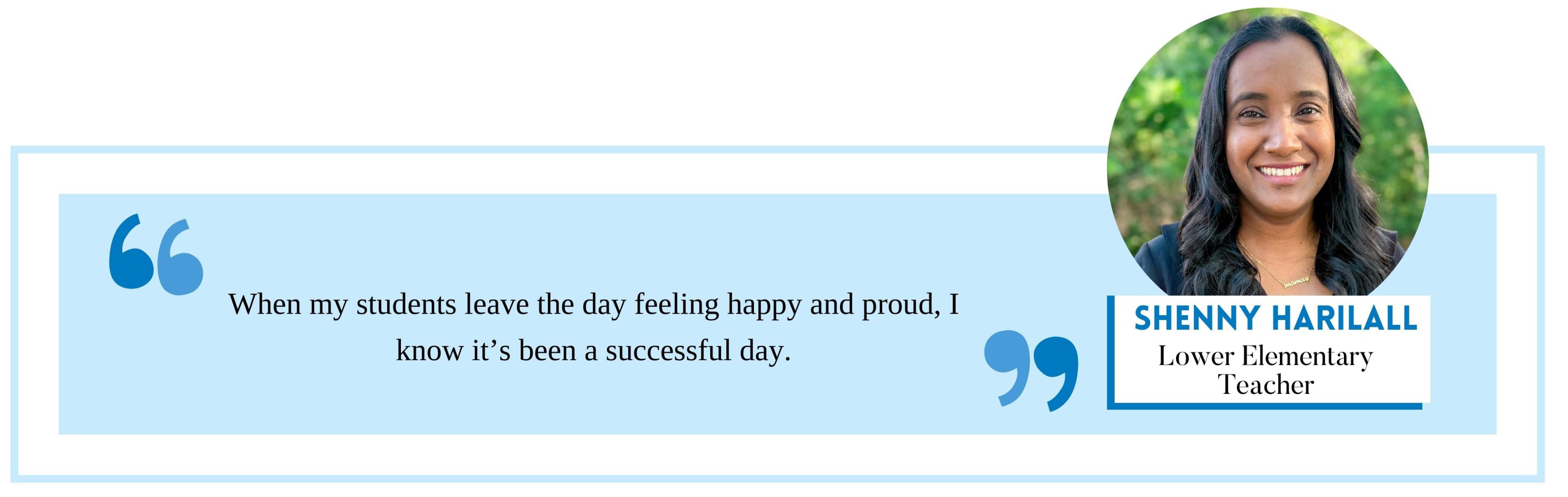
I know a student is having a successful day when they feel safe. Success isn’t about completing all academic work; it’s about social growth. When students become more independent, use their words to communicate, resolve conflicts, and interact appropriately with peers and teachers, that feels like a successful day to me. Each student has different needs, so I measure success by the progress they make individually.
What motivates you to keep growing as a teacher?
Being both a parent of a child with autism and an educator of a neurodiverse population means this work is deeply personal to me. I know what it feels like to sit on the other side of the table, hoping your child will be understood, supported, and believed in. That experience drives me every day to grow, to learn, and to do better for my students and their families.
What is one thing you love most about teaching at Westview?
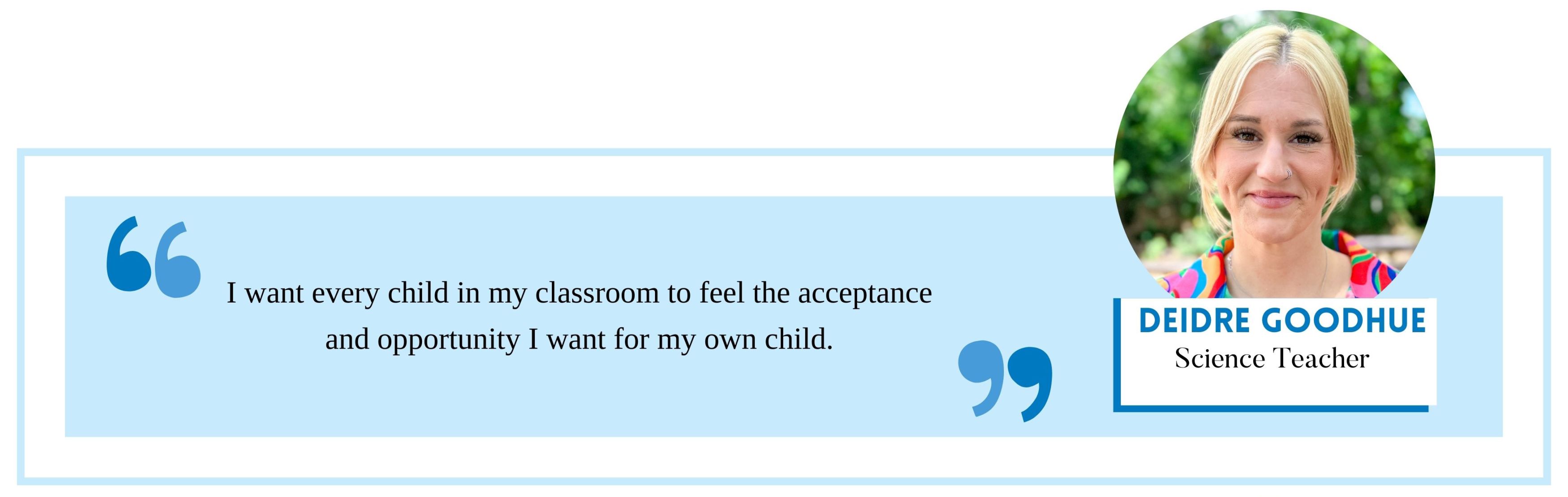
What I love most about Westview is that students are truly seen here. They aren’t defined by their challenges. They’re valued for their strengths, personalities, and potential. As a parent, that gives me peace of mind. As a teacher, it gives me purpose. It feels like a place where kids are safe to be themselves.
What motivates you to keep growing as a teacher?
The small moments of progress keep me going. When I see a student grasp a new concept or become comfortable enough to engage more fully, that is incredibly rewarding. Those moments push me to reflect on my teaching, try new approaches, and think creatively so I can create even more of them in the future. As my students grow, I want to grow right alongside them to help them reach their full potential.
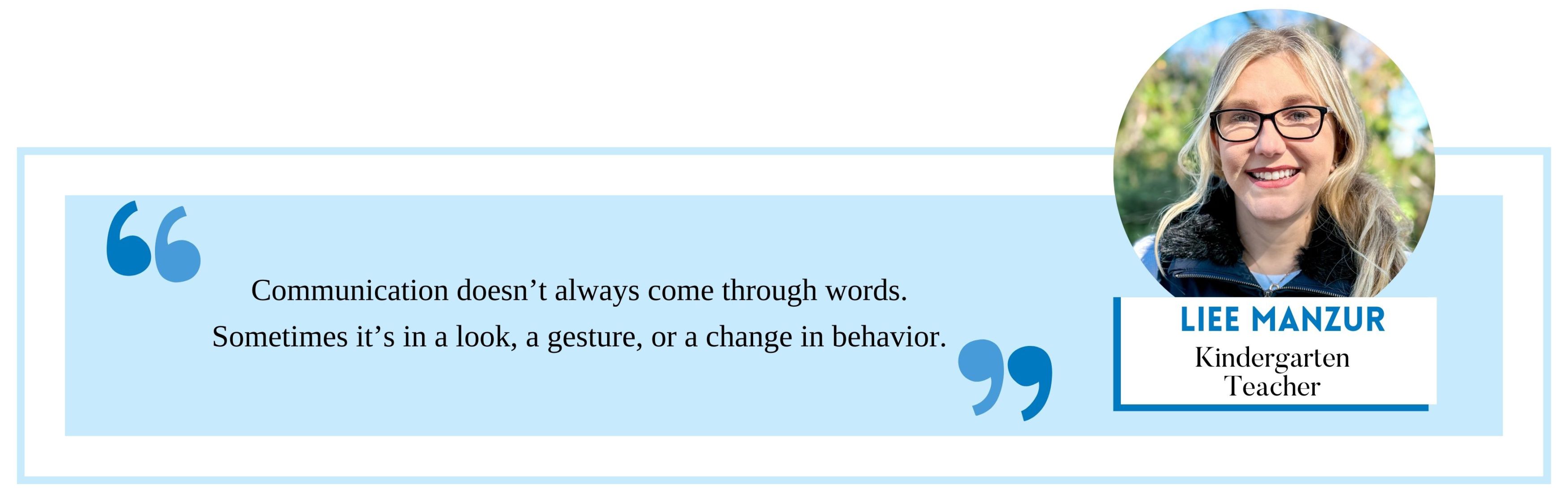
What is something you’ve learned from your students this year?
My students have taught me that communication can take many forms, and paying close attention to those moments has helped me understand them better and build stronger connections.
How do you measure success in the classroom?
I measure success by the growth and little victories I see over time. When a student transitions between two activities easily for the first time, something that was very difficult at the beginning of the year, that feels like a truly successful day.
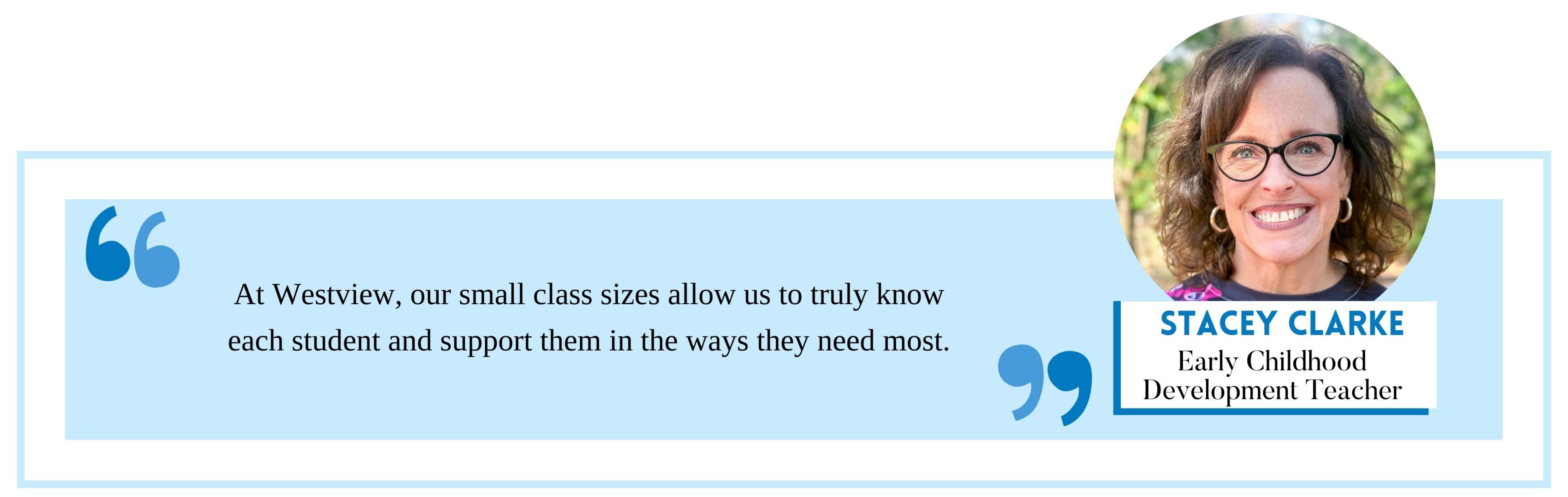
What is one thing you love most about teaching at Westview?
I love teaching at Westview for many reasons, but what stands out most to me is our small class sizes, which allow us to connect with and support each student on an individual level. The small class sizes also allow us to build strong connections and meaningful relationships with parents.
What is something you’ve learned from your students this year?
This year, my students have reminded me to celebrate progress in all forms. They’ve taught me to slow down, notice small successes, and recognize that growth can be seen in communication, behavior, confidence, and independence, not just academics.
What motivates you to keep growing as a teacher?
What motivates me most is remembering who I’m working for. If I can be a better teacher, it’s for the benefit of the children I teach and their future quality of life. Knowing my efforts make a difference keeps me striving to grow every day.
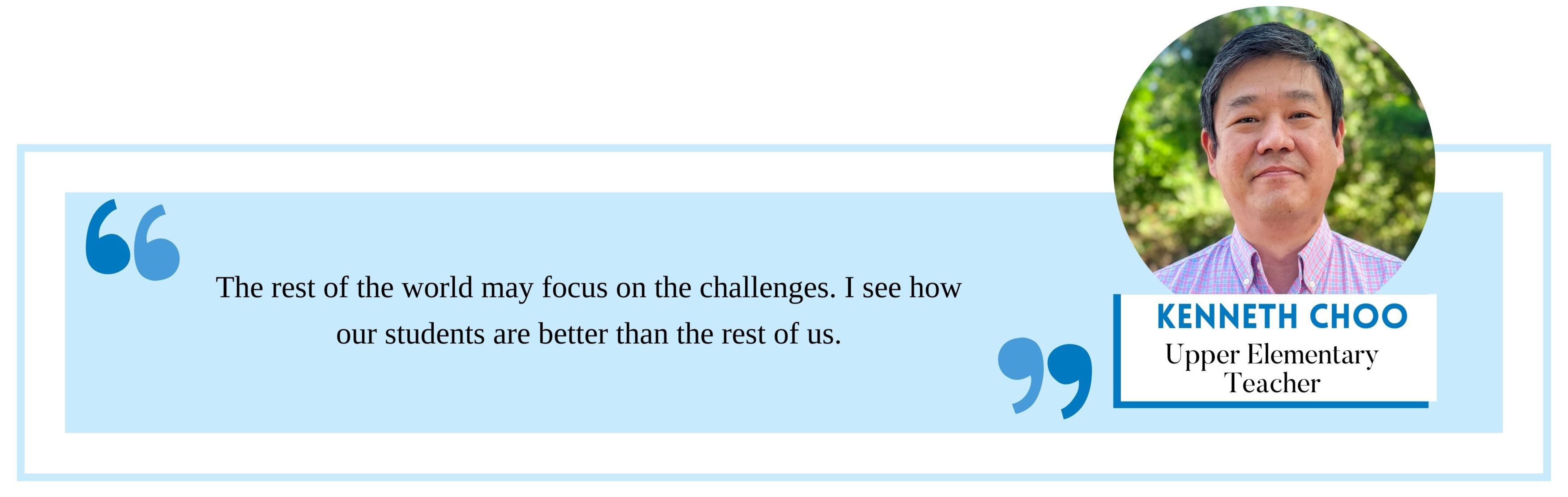
What is one thing you love most about teaching at Westview?
I love working with our students, all of whom are so special in very positive ways. While some may focus on challenges or shortcomings, I see how much they shine and the ways they are better than the rest of us.
What is something you’ve learned from your students this year?
Interestingly, this year I’ve learned that even kids can get tired of “six-seven!”
Friendship, Reimagined: How Westview Students Build Connection
February 10, 2026
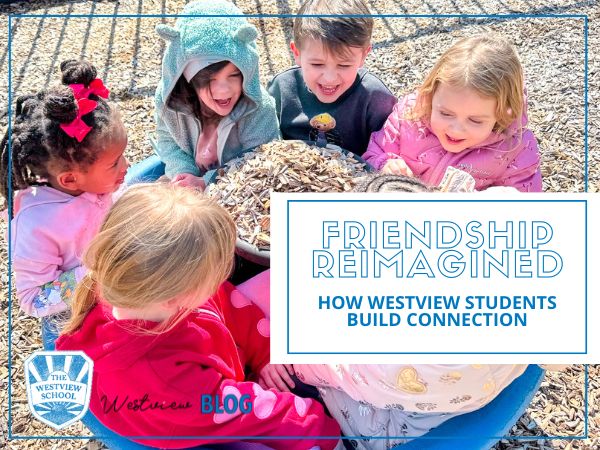
If you follow Westview on social media, you may have seen a recent video where Middle School students shared what they love about Westview and how it makes them feel. Their answers were heartfelt and reminded us why the school prioritizes connection and community. As one student explained, coming to Westview made them feel comfortable: when they were younger, they didn’t always feel included, but here [at Westview], “they were really nice to me, and I made great friends. I was no longer lonely anymore.” Another student said, “Honestly, the fact that I have friends... like, I have loads of friends. Come on, like loads of them.”
Friendship, Practiced Every Day
Friendship at Westview is intentional. For students whose social skills develop differently, connecting with peers doesn’t always happen naturally. That’s why social-emotional development is an essential part of the Westview curriculum and is built into daily learning. This gives students structured opportunities to practice connecting, collaborating, and communicating.
Social-Emotional Skills in Action
Fly Five is the social-emotional curriculum used in grades K through Middle School at Westview. After careful research, the school adopted the program campus-wide in 2022 because it directly supports the development of important relationship-building skills, such as empathy, cooperation, self-control, responsibility, and assertiveness. Teachers start these lessons in the classroom and give students opportunities to practice. Over time, what we see is these skills showing up organically across campus, in group projects, interactions outside of class, and everyday moments.
Extra Support for Friendships
In addition to classroom instruction, programs offered by The Stewart Center provide students with additional opportunities to strengthen peer relationships in smaller groups and therapeutic settings. Families can enroll their students in groups such as Lunch Bunch, Understanding Social Cues, and LEGO Club. Each group is uniquely designed to engage students through interest and use shared activities with peers and gentle guidance from therapists to support conversations and build confidence.
Friendships Taking Shape in Small Groups
Theresa Bautista, Occupational Therapist at The Stewart Center, sees this growth firsthand in her Lunch Bunch, Life Skills, and Fitness groups.
“In my Lunch Bunch groups, I’ve had the privilege of watching friendships take shape in meaningful ways,” Theresa shared.
“These students may have different personalities and ways of communicating, but kids have a way of finding common ground when they are in a safe and supported environment.”
During Lunch Bunch, students share special interests, tell stories from their lives, practice turn-taking in conversation, and work through small moments of conflict together. Theresa has watched students who were once very quiet begin to speak up, make jokes, and express their ideas with confidence.
One of the most rewarding moments comes when those relationships extend beyond the group itself. Students discover shared interests, make plans to spend time together after school, and advocate for one another in the classroom, including speaking up for peers who do not always communicate using spoken language.
Practical Ways to Build Connection
Mimi Le, Clinical Director of the Stewart Center and a licensed psychotherapist, has therapy groups available for enrollment that help students build essential skills for staying safe at school, at home, and online. She offered practical tips for being intentional in encouraging social interaction and friendships.
Tip 1: Taking the pressure off by making it a group activity or shared celebration will make it easier for individuals to hangout. It builds anticipation and gives them a reason to make more conversation based on a shared outing.
Tip 2: Group chats can also encourage camaraderie. Some personalities shine brighter when conversations are not face-to-face. They can also use gifs and memes to further share laughter and interests.
Tip 3: Working together to accomplish a goal can lead to great bonding time. Such as a volunteer event, teaching others about a special interest, a team project, or a fun scavenger hunt can build confidence in themselves and each other.
Celebrating Friendship
At Westview, friendship is cultivated, practiced, and celebrated. From classroom projects to casual conversations to structured therapeutic groups, students are learning that meaningful connections can be built, moment by moment, together.
Want to Learn More?
Families can contact The Stewart Center to learn about programs that help students practice social skills, build friendships, and grow confidence in supportive, guided settings.
Email Mimi Le at mle@westviewschool.org
Executive Functioning for Real Life: Supporting Routine, Time, and Responsibility at Home
January 12, 2026

Executive functioning comes up a lot in conversations about learning and behavior, but it can feel vague or overwhelming. What does it actually mean? And more importantly, what can families do at home that truly helps?
In a recent Westview EDU session, Cori Beach, Coordinator of Student, Family, and Community Engagement at The Westview School, shared practical, realistic ways to support executive functioning through everyday routines. Her focus was simple: tools you can actually use, starting right now.
What Is Executive Functioning, Really?
Executive functioning refers to a set of skills we use every day to manage our lives. These include:
- Starting and completing tasks
- Managing time and transitions
- Regulating emotions
- Organizing materials
- Problem-solving and prioritizing
- Monitoring and adjusting our work
These skills are not innate. They are learned through modeling, repetition, and practice over time. Many of us forget that we learned our own systems by watching others. Timers, calendars, checklists, routines, and mental shortcuts did not appear magically. Someone showed us, and we practiced until they became habits.
For our students, especially those with autism, executive functioning challenges can feel bigger. Task initiation, transitions, and emotional regulation often require extra support. That does not mean students are unmotivated or lazy. It means they are still building skills.
Why Executive Functioning Matters
Executive functioning affects almost every part of the day:
- Morning and evening routines
- Hygiene and self-care
- Homework and responsibilities
- Transitions between activities
- Emotional responses and flexibility
When these skills are supported, students feel more confident and capable. When they are not, even small tasks can feel overwhelming. The goal is not perfection. The goal is progress and independence.
Making Time Visible
One of the most common challenges Cori discussed is time blindness. Time is abstract. Five minutes can feel like forever, while twenty minutes can disappear in an instant.
A key strategy is making time visible. Tools like analog clocks, visual timers, or the Time Timer app help students see how much time is passing. When time becomes concrete, it becomes easier to plan around it.
Other helpful strategies include:
- Giving warnings before transitions
- Using short work periods followed by movement breaks
- Focusing on transitions rather than speed
Estimating Time Together
A powerful and eye-opening activity is comparing estimated time versus actual time.
Pick one task, such as brushing teeth or getting ready for school. Ask your child how long they think it takes. Write it down. Then time it together. Compare the results.
This works for all ages and builds awareness without judgment. Over time, students begin to understand how long tasks really take and how to plan accordingly.
Why Routines Matter
Routines reduce anxiety because they answer the question, “What’s next?”
When routines are predictable and consistent, working memory has less to hold onto. Students can rely on order rather than constant reminders. Visual checklists and simple schedules help at every age.
Consistency matters more than perfection. Even during breaks or vacations, keeping the same task order helps routines return more easily when school resumes.
The Power of a Launch Pad
A launch pad is a designated space where everything needed for the next day is placed the night before. It can be as simple as a taped square on the floor, a doormat, or a small basket.
Backpacks, lunch bags, sports equipment, and devices all go there. The goal is to eliminate morning stress and last-minute scrambling.
Responsibilities, Not Chores
Cori emphasized using the word 'responsibility' instead of 'chore'. Responsibilities build independence, sequencing, and confidence. They are not punishment. They are practice for real life.
Start small. Break tasks into clear steps. Model the process. Celebrate effort before perfection.
Start Small
The takeaway from the session was clear: do not try to change everything at once.
Pick one routine to focus on. One responsibility. One time-awareness activity. Practice it together. Adjust as needed. Build slowly.
Executive functioning grows with repetition, patience, and trust. When families and schools work together, those skills begin to show up not just at home, but everywhere students go.
--
Cori Beach is the Coordinator of Student, Family, and Community Engagement at The Westview School. In this role, Cori builds the relationships that help students and families feel understood and connected. With a background in education and a strong commitment to relationship-centered learning, Cori is passionate about creating meaningful connections that support growth and belonging. In her role at Westview, she partners with families, school staff, professionals, and community members to help students pursue real-life goals in ways that reflect their strengths and interests.
This blog post was adapted from the presentation given during WestviewEDU on Thursday, January 8, 2026. WestviewEDU is an education series presented by The Westview School for parents and caregivers of children with autism. For a complete list of WestviewEDU sessions remaining for the 2025-2026 academic calendar year, visit The Westview School online.
Progress, Not Perfection: Understanding Growth in Neurodivergent Learners
December 05, 2025

When Ceara Wainright-Herod, Upper School Principal at The Westview School, addressed parents at a recent Westview EDU, she began with a simple question: What does progress really mean?
The answer, she suggested, has little to do with report cards. With nearly two decades of public education experience, Herod has worked with students across the autism spectrum, neurodivergent and neurotypical learners alike. One message, she says, has remained constant: growth differs for every child and rarely follows a straight line. Her Westview EDU session, "Progress, Not Perfection: Understanding Growth in Neurodivergent Learners," directly challenged the common belief that progress is only about grades, reinforcing that growth at Westview is about the whole child.
Beyond the Report Card
“Dictionary.com defines progress as growth and development, continuous improvement, a movement toward a goal,” Herod said. “Nowhere in that definition do you see the word ‘grades.’ Nowhere does it say ‘academics.’”
For many parents, grades carry enormous weight. A low test score can cause worry; a good report card offers reassurance. Herod believes equating grades with progress overlooks how children, especially neurodivergent ones, develop.
“There are so many skills your child is building that don’t show up on a report card,” she said. “Independence. Confidence. Curiosity. Emotional regulation. Problem-solving. Those are real gains. They deserve celebration.”
The Myth of the Straight Line
One important part of Herod’s message was the reminder that no child grows in a straight, predictable trajectory.
“Growth includes plateaus, regressions, and spurts,” she said. “That’s not a flaw, that’s development.”
She encouraged parents to recall their own school years: subjects that came naturally, years that were a struggle, moments when understanding clicked. Children experience the same uneven progression. Neurodivergent learners may show this more, but the pattern is universal.
“A single low grade isn’t the story,” she said. “It’s one data point in a much bigger picture.”
Three Lenses for Understanding Growth
Westview uses a holistic, strength-based model to understand student growth, which Herod believes offers a more accurate and compassionate view. The model includes three domains:
ACADEMIC GROWTH: This includes the traditional markers such as reading, writing, and math, as well as the quieter signs of learning: beginning an assignment independently, asking questions, showing persistence, and building comprehension over time.
“Academic growth isn’t just the score,” Herod said. “It’s effort, curiosity, and the willingness to try again.”
SOCIAL-EMOTIONAL GROWTH: This area encompasses emotional regulation, self-awareness, confidence, and peer relationships. For many neurodivergent learners, these skills take time to develop.
“When children don’t know something, we teach,” Herod emphasized. “That includes how to deal with frustration, how to express emotions, and how to calm their bodies and minds. These are learned skills.”
EXECUTIVE FUNCTIONING: Organizing materials, managing transitions, following routines, and using coping tools are key here.
Herod recalled watching Westview Middle School students confidently open their lockers this morning, something that had taken weeks of practice and patient guidance.
“It was incredible to witness,” she said. “Routine, structure, and repetition work. When students succeed, their pride is enormous.”
The Role of Discomfort in Growth
Herod repeatedly emphasized: growth is uncomfortable for children and adults.
She shared several quotes with the audience, including Brian Tracy’s well-known line, “Growth and comfort do not coexist.”
She explained that children resist new challenges not because they can't succeed, but because the discomfort can be overwhelming.
“Those big reactions you see? The protests, the tears? That’s fear,” she said. “They don’t yet have the words to say, ‘This scares me’ or ‘This is hard for me.’”
Parents can help their children manage discomfort by modeling coping strategies.
“Tell your kids, ‘I’m nervous about a meeting today, so I’m taking deep breaths,’” she suggested. “Show them what managing big feelings looks like. That vulnerability is powerful.”
Rethinking Assessment
Twice a year, Westview uses standardized MAP Growth assessments to gather academic data, but Herod urged parents not to put too much weight on the scores.
“These tests aren’t designed specifically for neurodivergent learners,” she explained. “Some students sit through 45 questions in one session. If they’ve had a tough morning, if they’re distracted, if they’re overwhelmed, that score isn’t representative of their true understanding.”
Instead, the school emphasizes teacher observations, student reflections, and classroom work samples for a complete picture of progress.
“Tests matter,” she said, “but they don’t define your child.”
A Partnership Between Home and School
Herod stressed the importance of partnership: parents know their children best, and teachers see them in structured settings. Together, families and educators provide continuity that helps students thrive.
She encouraged parents to share what works at home, ask questions during conferences, and communicate openly with teachers about concerns.
"We are a village," she said. “Your insight helps us support your child, and ours helps you support them at home. Working together, students make meaningful progress.”
A Final Story
Herod ended with a personal story. At four, she struggled with separation, sensory overwhelm, and fear, crying daily at her first school as staff grew frustrated.
“I wasn’t dramatic. I wasn’t a troublemaker. I was anxious,” she said. Her mother moved her to another school where she felt safe and welcomed. She never cried again.
"I share that to show what safety and belonging can do for a child," she said. “That's what we want for your children at Westview: a place where they feel loved, supported, and celebrated on all days.”
The Message Parents Took Home
By the end of the session, one message stood out: progress is not about achieving perfection, but about each child's unique, steady growth at their own pace.
“Your children are not victims of their challenges,” Herod said. “They are victors. And every day, we see their victories.”
--
Ceara Wainwright-Herod, M.Ed. is the Upper School Principal at The Westview School. She has over 18 years of experience in public education, having served as a teacher, specialist, and assistant principal in public school system. Her work is grounded in student-centered learning and inclusive leadership. Ceara holds a master’s in Educational Leadership from the University of Houston–Victoria and has extensive experience supporting students across the autism spectrum and has collaborated with families and specialists to design individualized plans that meet each learner’s needs.
This blog post was adapted from the presentation given during WestviewEDU on Thursday, November 13, 2025. WestviewEDU is an education series presented by The Westview School for parents and caregivers of children with autism. For a complete list of WestviewEDU sessions remaining for the 2025-2026 academic calendar year, visit The Westview School online.